

The Story of Jang
Healthy soybeans, salt and clean water make a flavor that comes from nature.Jang is the family of fermented soybean foods at the heart of Korean cooking: doenjang (fermented soybean paste), ganjang (soy sauce) and the meju (blocks of fermented soybeans) they are made from. Here is where jang comes from, and what makes it traditional.


 Origins
Where jang began
Food scholars point to Manchuria, in what is now northeast China, as the place where soybeans were first grown. If they are right, the culture of jang, which is built on soybeans, most likely began there as well.
Civilization in Manchuria took off as bronze came into use, around 2000 to 1500 BC, and experts believe jang dates from about the same period. At first it was eaten only as a simple, coarse paste. Scholars think people began using jang to season food, the way we do today, around the 10th century BC, in the time of Gojoseon, the first Korean kingdom.
Jang-making advanced and spread once the kingdom of Goguryeo came to rule Manchuria. The records below point to this.
- SanguozhiRecords of the Three Kingdoms, a Chinese historyNotes that the people of Goguryeo were skilled at making fermented foods.
- Samguk SagiHistory of the Three Kingdoms, a Korean historyLists meju among the foods sent as wedding gifts in the kingdom of Silla, along with rice wine and oil.
- BalhaeLate 7th centuryAfter people from Goguryeo founded the kingdom of Balhae, meju became one of its best-known products.
- Bowuzhi and Xuezhai ZhanbiChinese texts (博物志, 學齊佔畢)Introduce meju as something that came “from abroad.”
- JapanAround the 8th centuryHistorical records show that jang reached Japan, where different climates and eating habits shaped jang cultures of their own.
Dates and sources follow the views of Korean food scholars. Early dates are estimates.
 Traditional Jang
What makes jang traditional
Traditional Korean jang is fermented from just three things: soybeans, salt and water. That is the only way to get its pure, true flavor.
Once anything else goes in, such as seasonings or other additives, it no longer qualifies as traditional jang. It is better classed as an improved, or modified, jang.
Yet many modified jang are sold in Korea as traditional. What is more unfortunate is that many shoppers don’t know this. They take modified jang made with seasonings and additives for the real thing, and some even prefer it.
| Compared | Traditional jang | Modified jang |
|---|---|---|
| Ingredients | Soybeans, salt and water only | Seasonings or other additives mixed in |
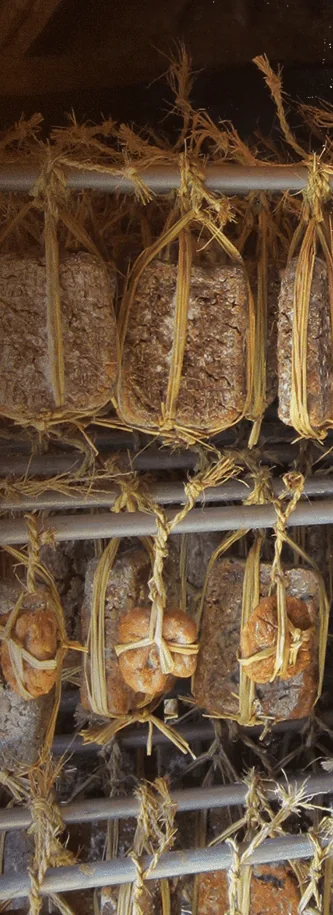
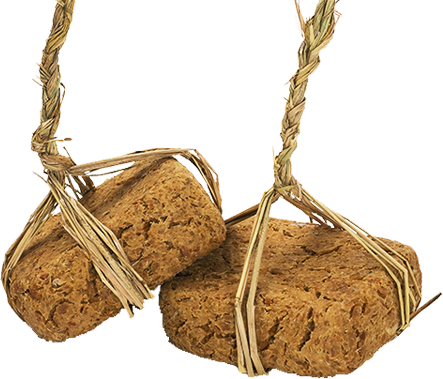
| Meju | Cooked soybeans shaped by hand and fermented slowly | “Improved” meju: cooked soybeans coated with a starter culture and fermented in a short time |
| Flavor | Deep flavor from slow fermentation and long aging | Cannot match the depth of traditional meju |
The true taste of jang starts with meju
Meju is cooked soybeans, mashed, shaped into blocks and left to ferment. How well it ferments decides how the jang will taste.
What Bacillus subtilis does inside the beans
- ProteinAmino acids
- StarchSugars
- FatFatty acids
As meju ferments, Bacillus subtilis, the microbe that ferments meju, works its way into the cooked soybeans. It breaks down their main components, protein, starch and fat, into amino acids, sugars and fatty acids, as fully as it can.
That well-fermented meju is then steeped in brine of the right saltiness, in onggi (earthenware crocks), under fully natural conditions, and left to age for the right length of time. This is how traditional jang gets its true flavor.
When meju goes wrong
In badly fermented meju, the soybean components stay largely unbroken, the beans spoil, or other unwanted microbes take over. Steeped in brine and aged, such meju turns into an off jang with an unpleasant taste and a foul smell.
To ferment meju well, the maker needs a solid grounding in the science of microbiology and fermentation. In reality, many people seem to make traditional jang out of habit, without any scientific knowledge.
Our Research
The taste of jang depends on how the meju ferments
So how do you ferment meju well? We follow three principles.
- 01Know the scienceThe maker needs a solid grounding in microbiology and fermentation science.
- 02Work with the microbesThe maker needs a real feel for the microbe that ferments meju, Bacillus subtilis.
- 03Care for them like familyThe maker has to pour care into the microbes, the way parents love their children.
So for us, research into taste comes down to this: we study every kind of microbe that settles on meju, keep out the ones that harm the flavor of jang, and do all we can to culture and grow only the beneficial ones.
Looking for traditional Korean jang?
We work with importers, distributors, Korean grocery stores and restaurants. Tell us about your market, the products you need and the quantities you have in mind.